
Introduction
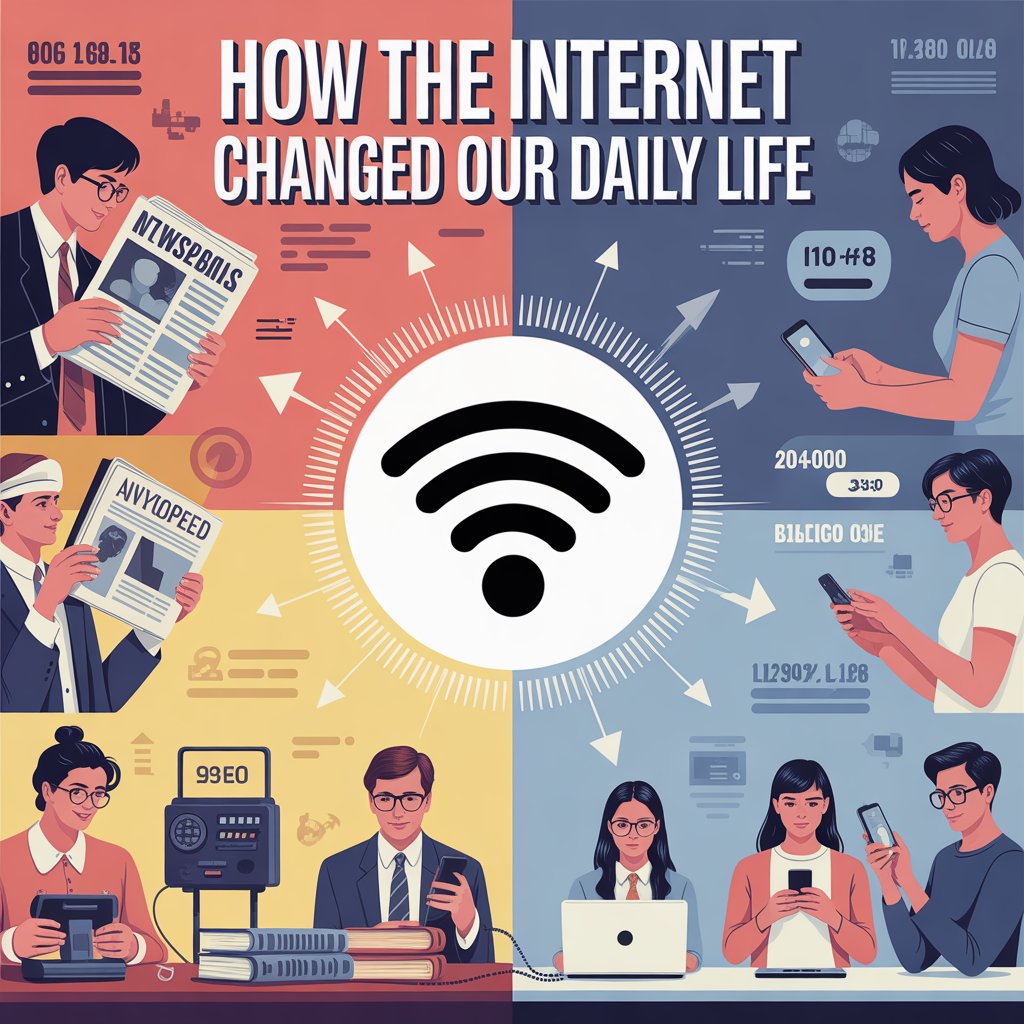
The internet has become one of the most important inventions in modern history. It has completely changed the way people live, communicate, work, and access information. In the past, people depended on traditional methods such as newspapers, letters, and physical stores. Today, the internet allows people to do many tasks instantly from their smartphones or computers.
From online communication to digital businesses, the internet has transformed daily life in many ways. It has made information more accessible, improved communication, and created new opportunities for people around the world.
Easy Access to Information
One of the biggest advantages of the internet is easy access to information. Before the internet, people had to visit libraries or read books to find information. Today, anyone can search for almost anything online within seconds.
Search engines help users find answers to questions, learn new skills, and stay updated with the latest news. Students can access educational resources, tutorials, and online courses without leaving their homes.
This easy access to information has made learning faster and more convenient.
Communication Has Become Faster
The internet has revolutionized communication. In the past, sending a letter could take several days or even weeks. Now, people can send messages instantly using email, messaging apps, and social media platforms.
Video calls allow people to see and talk to family members, friends, and colleagues from anywhere in the world. This has made global communication easier and more efficient.
Businesses also benefit from online communication tools that help teams collaborate remotely.
Online Shopping and Digital Payments
Another major change brought by the internet is online shopping. People can now buy products and services from online stores without visiting physical shops. Online marketplaces offer a wide variety of products, competitive prices, and convenient delivery options.
Digital payment systems have also made transactions faster and more secure. People can pay bills, transfer money, and make purchases using online banking or mobile payment apps.
This convenience has made online shopping a popular choice for millions of people.
Entertainment and Media
The internet has also transformed the entertainment industry. People no longer rely only on television or radio for entertainment. Instead, they can watch movies, listen to music, and play games online.
Streaming platforms allow users to watch videos anytime and anywhere. Social media platforms also provide entertainment through short videos, live streams, and digital content created by users.
This has created new opportunities for content creators, influencers, and digital entertainers.
Online Education and Learning
Education has improved significantly because of the internet. Students can now access online courses, educational videos, and digital learning platforms.
Online learning allows students to study at their own pace and learn from experts around the world. It also helps people learn new skills such as programming, graphic design, digital marketing, and more.
The internet has made education more flexible and accessible for everyone.
Remote Work and Digital Careers
The internet has created new career opportunities and changed the way people work. Many companies now allow employees to work remotely using online tools and communication platforms.
Freelancing and online businesses have also become popular. People can earn money through blogging, digital marketing, e-commerce, content creation, and other online services.
This digital economy provides flexibility and allows individuals to work from anywhere.
Social Media and Global Connectivity
Social media platforms have connected people from different parts of the world. Users can share photos, videos, and ideas with others instantly.
Social media also helps businesses promote their products and interact with customers. Many companies use social platforms for marketing and brand awareness.
Although social media offers many benefits, it is important for users to manage their screen time and use these platforms responsibly.
Challenges of the Internet
Despite its many benefits, the internet also has some challenges. Issues such as cyber security, online scams, and privacy concerns have become more common.
People must be careful when sharing personal information online. Using strong passwords, avoiding suspicious links, and protecting personal data can help reduce online risks.
Responsible internet usage is essential for maintaining safety in the digital world.
The Future of the Internet
The internet will continue to evolve with new technologies. Faster internet connections, artificial intelligence, and smart devices will make online services even more powerful.
These innovations will improve communication, business operations, education, and entertainment. The internet will remain an essential part of everyday life for future generations.
Conclusion
The internet has significantly changed daily life in many ways. It has improved communication, education, business, and entertainment. People can now access information, connect with others, and perform many tasks online within seconds.
As technology continues to grow, the internet will play an even greater role in shaping the future. By using the internet responsibly and securely, individuals and businesses can benefit from the many opportunities it provides.
